Showing posts with label never-was. Show all posts

Wednesday, June 15, 2011

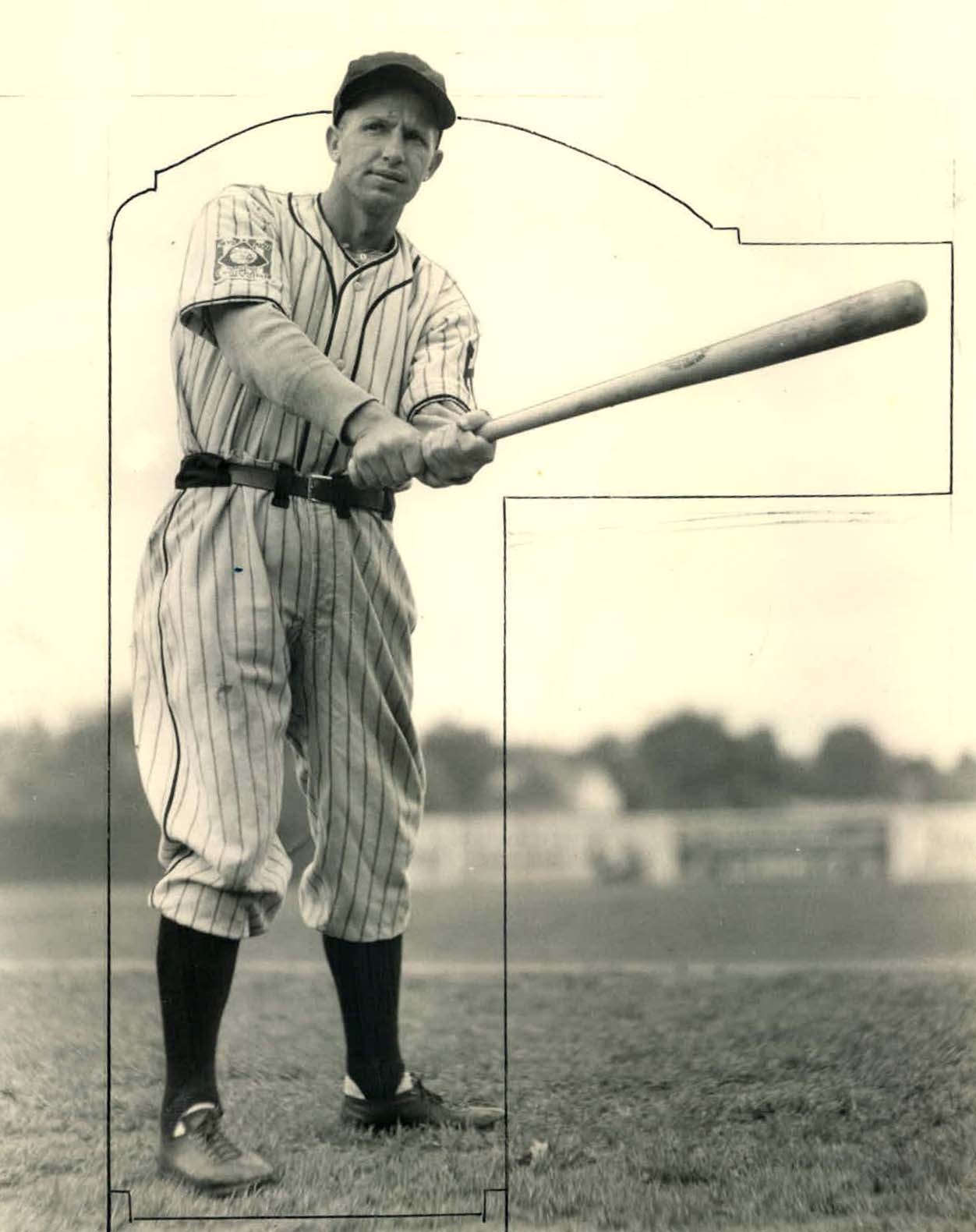
Les Sheehan, the PCL star

By the 1920s, the Pacific Coast League was the premier minor league. If you were signed to one of their clubs and received a starting gig, you could pretty much sit back and wait for the Major League Baseball contracts to roll in. However, some players fell through the cracks of MLB scouts. One of those players, Les Sheehan, patrolled the outfield for various PCL clubs from 1920 to 1928 without making an appearance in an MLB game.

Sheehan was born Leslie Maurice Sheehan on July 30, 1894 in Sacramento, California. His parents, Timothy Sheehan and the former Mamie O'Rorke, both had families that hailed from Ireland. Timothy, who was originally from Portland, Maine, worked as a blacksmith in the Sacramento area. Early in his life, Les played with local sandlot teams. He attended Sacramento's public schools where he honed his baseball skills. He considered joining the outfield tandem for the PCL's Oakland Oaks in 1915, but declined.

In 1916, Sheehan served as the captian of the University of Santa Clara baseball team. After the collegiate season, he joined the minor league Great Falls Electrics of the Class-B Northern League where in 66 games he batted a respectable .311. His average was good enough for a trial with the PCL San Francisco Seals. He batted .281 in 24 games played.

Sheehan ventured south in 1917 and signed with the Birmingham Barons of the Class-A Southern Association. He served as a starting first baseman for the Barons, who gave him his first full season of pro-baseball. On the season, he batted just .225 in 151 games played. It would later prove to be the only season of Sheehan's career as a first baseman.

At the height of World War I, Sheehan was drafted into the U.S. Military, subsequently putting his baseball career on hold. He finished his service in 1919 and joined the semi-pro Woodland Yippers of the Trolley League. After the '19 season, he was released by the Yippers so he could join his home-town Sacramento Senators of the PCL for the 1920 season. Before the start of the season, Sheehan traveled to Japan and China for a baseball tournament.

On May 1, Sheehan was forced into service as a pitcher after the Senators used up their pitching staff. He pitched three full innings and gave-up one earned run. Most of his season was spent at third base. He batted .225 in 145 games played. He re-signed with the Senators during the '21 season and on June 14, Sheehan hit two home runs in a game against the Oakland Oaks which put Sacramento within one and a half games out of first place in the PCL. He raised his batting average to .277 that season. All of his games that year were spent in the outfield.

In February 1922, Sheehan married the former Madelyn Huss of Sacramento. Although friends of the couple knew of their engagement, the two eloped without alerting anyone. Despite initial reports that he was to appear as the Senators' first baseman for the '22 season, he played the majority of the season in right field. He also served as a utility infielder. He finished the season with a .273 average in 175 games played.

For the price of $1,000, Sheehan was sold by the Senators to the PCL Salt Lake City Bees. Sheehan was slated to start at second base for the Bees. He had a break-out season in '23. He hit .338 in 196 games played. Amongst league batters, he led in doubles (72), was second in total bases (460), third in home runs (36) and fifth in hits (272).

Following-up his best season on record was going to be difficult for Sheehan. At the start of the season, it was announced that he was going back to his former position in right field. He exceeded the standard he set during the 1923 season as he batted .346 in 168 games played. After the season, The Oakland Tribune wrote that Sheehan wasn't getting noticed by any MLB team because the market he was playing in was too small. Despite the report, Sheehan re-signed with the Bees for the '25 season.

He had another stellar season in the Bees' outfield. Sheehan was second in the league in doubles (69) and fourth in home runs (33). His average that season didn't miss a beat from the previous year as it was just four points lower. In March 1926, Sheehan signed with the PCL Hollywood Stars. In July, he broke his finger and was out until early-August. His statistics took a dip that season, but were still on a respectable level as he hit .306 in 116 games. His power numbers declined as he only hit 23 doubles and five home runs.

The 1927 season proved to be another down-hill campaign for Sheehan, who was still on the Hollywood roster. In 117 games, he batted .288. On January 29, 1928, Sheehan was sold by the Stars to the Chattanooga Lookouts of the Class-A Southern Association. William Lane, the Stars president and the man who orchestrated the deal, said that Sheehan had to go because Hollywood was in a re-building phase, but also said that he was a "good worker" over his two-seasons with the club.

Sheehan refused to report to his new team and was effectively a free agent. On May 11, he signed with his old team, the PCL Sacramento Senators. On the year, he batted .261 in 51 games played. His role that season was primarily as a utility player and pinch hitter. Sheehan started the '29 season with the Senators, but was eventually sold to the PCL Portland Beavers. He played just one game that season, going hitless in one at-bat. Sheehan, who was 34, effectively retired from pro-baseball after that season.

By 1930, Sheehan was living in Sacramento with his wife, Madeline, and their daughters Marilyn and Marvine. He was working as an oil-company salesman. In 1942, Sheehan was living at 841 46th Street in Sacramento with his wife. He was working for the Veteran's Welfare Board. He died on August 12, 1961 in his home-town of Sacramento.

References:
"1900 United States Census". ''U.S. Census Bureau''. U.S. Federal Government. 1900.
"1910 United States Census". ''U.S. Census Bureau''. U.S. Federal Government. 1910.
"1930 United States Census". ''U.S. Census Bureau''. U.S. Federal Government. 1930.
"Leslie Sheehan U.S. Passport Application". ''U.S. Department of Labor''. U.S. Federal Government.
"[Untitled]". "The Oakland Tribune" (Oakland, California). p.42. 19 September 1915.
"Les Sheehan May Join the Capital Yippers". "Woodland Daily Democrat" (Woodland, California). p. 4. 24 February 1920.
"Baseball Season Opens on April 6". "Woodland Daily Democrat" (Woodland, California). p. 8. 31 March 1920.
Murphy, Eddie (2 May 1920). "Oaks Make Merry At Expense of B. Rodgers Pitchers". The Oakland Tribune (Oakland, California). p. 46.
"Les Sheehan Signs Life Contract". "Woodland Daily Democrat" (Woodland, California). p. 1. 9 February 1922.
"Sacramento Coasters". "Woodland Daily Democrat" (Woodland, California). p. 4. 18 March 1922.
"Coast Teams Swing Into Action". "Ogden Standard Examiner" (Ogden, Utah). p. 14. 2 April 1922.
"Salt Lake Expects Much of Les Sheehan". "Woodland Daily Democrat" (Woodland, California). p. 5. 14 March 1922.
"1923 Pacific Coast League Batting Leaders". "Baseball-Reference.com". Sports Reference LLC.
"Bees Lineup For First Game With Oaks". "The Oakland Tribune" (Oakland, California). p.34. 4 April 1924.
"Sheehan Good Player". "The Oakland Tribune" (Oakland, California). p. 41. 10 October 1924.
"1924 Pacific Coast League Batting Leaders". "Baseball-Reference.com". Sports Reference LLC.
"1925 Pacific Coast League Batting Leaders". "Baseball-Reference.com". Sports Reference LLC.
"1926 Pacific Coast League Batting Leaders". "Baseball-Reference.com". Sports Reference LLC.
"Visner-Nelson Rematched". "The Oakland Tribune" (Oakland, California). p. 13. 31 March 1926.
"Statz's Great Play Helps Los Angeles Win Crucial Series". "The Oakland Tribune" (Oakland, California). p. 13. 31 March 1926.
"Les Sheehan Sold by the Stars to Chattanooga Club". "The Oakland Tribune" (Oakland, California). Associated Press. p. 12. 30 January 1928.
"Les Sheehan Signs With Senators". "The Oakland Tribune" (Oakland, California). p. 30. 12 March 1928.
"Many P.C.L Players Are After Batting Title". "The Oakland Tribune" (Oakland, California). p. 31. 26 March 1929.
"World War II Draft Registration Card". "U.S. Military". U.S. Federal Government. 1942.
"Social Security Death Index". U.S. Federal Government. 1961.

Sunday, August 22, 2010

Ollie Carnegie part three: Later career and legacy

On April 4, 1939, Carnegie was re-signed by the Bisons, making it his ninth season with the team. That season, like the last would prove to be a stellar one for Carnegie as he batted .294 with 29 home runs. His long ball total again led the International League. From this point on, Carnegie's offensive totals took a dip, hitting 15 home runs in 1940 and seven in 1941. On January 2, 1942, at the age of 42, the once king of Buffalo baseball was released from his contract. Bisons general manager John Stiglmeier later stated that it was "the hardest thing [he] ever had to do".

Although Carnegie's tenure ended in Buffalo, his playing career did not. He joined the Lockport White Sox of the Class-D PONY League that season, batting a respectable .310 with 16 home runs. He did not play professionally in 1941, but returned in 1942, joining the PONY League Jamestwon Falcons. He also managed the team that year. On the season, he batted .305 in 94 games while the Falcons as a team went 70-54.

In what was one last season of glory, the Buffalo Bisons brought Carnegie back in 1942. Carnegie, who was 46, batted .301 in 39 games. That season would be his last as a player in professional baseball, but he didn't stay completely out of the game. After his last season, the Bisons hired him as a scout and Carnegie and his family set-up shop in Buffalo, New York, where he stayed until his death in 1976.

Carnegie was in some respects the typical minor league player. He worked as a security guard during the off-season to stay fit and help support his family. But in other regards, Carnegie is in a league of his own. To this day, he holds the all-time International League home runs and run batted in record with 258 and 1,044, respectively. He holds the Buffalo Bisons single-season home run record with 45 and is the Bisons all-time doubles (249), games played (1,273), hits (1,362), home runs (258), and run batted in (1,044) leader. Carnegie was an inaugural member of the International League Hall of Fame in 1947 and was also inducted into the Buffalo Baseball Hall of Fame in 1985 and the Greater Buffalo Sports Hall of Fame in 1992. He will be forever remembered as one of the greatest Bisons in history.

Many comment that if it Carnegie hadn't waited until he was was 31 to start playing pro-ball regularly, he would have been an outstanding major leaguer. But Carnegie seemed content with his honest job in the steel mills of his home town, playing semi-pro ball when he could with the local sandlot stars, later joining he pro-circuit to pick up where he left off in Pittsburgh. It's easy for us to now comment about the "should haves" and "could haves" of his career, but there's no question that Ollie Carnegie was one of the greatest minor leaguers of all time.

Ollie Carnegie part two: "Sandlot Bambino" turned minor league superstar


In 1933 with the Bisons, Carnegie received praise from team president Frank J. Offerman. Offerman said of Carnegie that "a finer character has never donned a ball uniform". That season, Carnegie was third in the International League in home runs (36) and slugging percentage (.618). The duo of Carnegie and teammate Ollie Tucker recived the nickname the "home run twins" that season after Tucker also put up an impressive home run total, 27. Carnegie entered the 1934 season "dissatisfied" with his contract, feeling that he deserved more money because of the performance he put on the season before. Carnegie again slugged the third most home runs that season with 29 in 142 games.

Come spring training in 1935, Carnegie did not report and was dubbed a "hold out". He seemed satisfied with making the Bisons sweat while he whacked around Pittsburgh sandlot pitchers as an early-season member of the Dormont club. Finally, in May, Carnegie reported to Buffalo and picked-up where he left off, hitting 31 home runs, the third most in the league. During the off-season, local sandlot players from Pittsburgh and various other major leaguers, including brothers Dizzy Dean and Paul Dean, played on an all-star team that played the Pittsburgh Crawfords, the local Negro league team. Carnegie joined the all-star team in the widely popular game.

In 1935, Carnegie was again in the top-three in International League home run hitters, this time ranking second. He was sidelined for much of the 1936 season with an ankle injury, but still played 74 games. While he was out, the Bisons replaced Carnegie with Donny Dickshot, a player who proclaimed he was the "ugliest man in baseball". "Ugly" Donny proved quite impressive as a sub, batting .359 with 17 long balls in 130 games.

Carnegie was back in full strength for the 1937 season, batting .308 with 21 homers in 134 games. He was tied with fellow minor league journeyman Woody Abernathy for fifth in the league in home runs that season. Although Carnegie was in the top-five amongst home run hitter in the league, he had never led the league. That all changed in 1938. That season, he hit 45 out of the park after early season struggles. At the time, the home run total racked-up by Carnegie was the fourth most all-time in a single season. Due to his outstanding performance, he was award the International League Most Valuable Player Award, now being the only player to receive this honer with no major league appearances. From this point on, there was little question that the sandlot "Bambino" turned pro minor leaguers was one of the best in the history of the league.

Bibliography:
"Oliver Carnegie Minor League Statistics & History". Baseball-Reference. Sports Reference, LLC.
Paul Kurtz (February 22, 1933). "Carnegie, Packard Return Minor League Contracts". The Pittsburgh Press. The Pittsburgh Press.
Paul Kurtz (May 10, 1934). "Carl Frey Accepts Offer From Overton Semi-Pros". The Pittsburgh Press. The Pittsburgh Press.
"Dizzy And Daffy Play Here Today". Pittsburgh Post-Gazette. Pittsburgh Post-Gazette. October 23, 1934.
"Bisons History: The 1930s". Buffalo Bisons. Minor League Baseball.
Paul Kurtz (April 9, 1938). "Sports Stew—Served Hot". The Pittsburgh Press. The Pittsburgh Press.
"Carnegie's Homerun (sic) Mark Ranked Fourth". The United Press. The Pittsburgh Press. January 19, 1939.
Paul Kurtz (January 28, 1939). "Sports Stew—Served Hot". The Pittsburgh Press. The Pittsburgh Press.

Saturday, August 21, 2010

Woody Abernathy, the never-was


In the modern minor league circuit, it's not rare to see career minor leaguers. Maybe they'll play three seasons in low-A ball before calling it quits, or maybe (and this is if they're lucky) they'll get brought on at the age of 31 to a Triple-A team to bring veteran leadership the organizations' top prospects. Well, in the 1930s, it wasn't this way. Local small-town minor leaguers were folk heroes. Just look at Ernest Thayer's poem, Casey at the Bat and you'll see what I mean.

Woody Abernathy, born October 16, 1908, was one of those folk heroes. During the mid-1930s, he was the king of Baltimore baseball as a member of the Double-A Orioles, who played in the International League. Over his time in the minors, he slugged 210 home runs, an impressive feat for a 13-year career that ended when he was only 31. Abernathy led the IL in home runs twice; first in 1934 with 32, and second two years later when he hit 42 out of the park.

With Major League Baseball now in Baltimore, many forget about Abernathy. Since it was so long ago, who can blame them? I have been hard pressed to find information on Abernathy even when looking for it. But we can't forget Abernathy and the IL Orioles. If not for them, baseball may not be in Baltimore today. The 1930s teams, with Abernathy at the throne, laid the ground work for an MLB franchise in the town.

Abernathy started his baseball career at Auburn University. He was a star at football, but chose to go into professional baseball instead. Joining the Vicksburg Hill Billies in 1928, Abernathy made his professional debut batting .358 with 33 doubles, 16 triples, and two home runs in 123 contests. During the next season, he joined the Montgomery Lions, where he played until 1931 when he joined the Birmingham Barrons.

In 1934, Abernathy began his tenure with Baltimore, batting .309 with 32 home runs on the season. Over the next three seasons, he knocked the ball out of the park, reaching his career high in homers in 1936 when he hit 42. In 1938, Abernathy ended his relationship with the Orioles after joining the Buffalo Bisons, also of the International League.

For the season's to follow, Abernathy did well, hitting .281 in his final season with two American Association clubs; the Milwaukee Brewers and St. Paul Saints. Abernathy was remembered in Baltimore for years to come was the larger than life center field power hitter who never got his shot in the majors.

In retrospect, it's easy to say that Abernathy should have chosen professional football instead of slumming around the minors for years. But Abernathy brought joy to many fans, making their lists of all-time great Orioles. Simply put, he made a name for himself. So what if he made it to the majors? He might have been "just another player". Someone who tried their hand in the majors and made it nowhere. The truth is, Abernathy did make it. Playing Baltimore baseball for the five years made him a mini-folk legend amongst fans and commentators. Maybe this is what modern-day minor league "never-were's" should think about when digging into the plate. I mean, I can remember the first home run I ever say. It was Khalil Greene in 2003 when he was playing with the Portland Beavers. It went right out of the park onto the street outside and gave Portland the lead. I'm sure a lot of you can remember the first home run you ever saw. That's the thing players should take away; the impact of one at-bat is far greater than they can ever imagine. So make the most of it.

Note 1: Hey, if you're looking for more info on the Baltimore Orioles IL team, this site is really cool. http://www.forgottenbirds.com/ Enjoy!

Note 2: I will be posting another mini-bio on Abernathy in the near future about an injury he sustained during his final season in the International League. Check back soon.

Bibliography:
"Woody Abernathy Minor League Statistics & History". Baseball-Reference. Sports Reference, LLC.
Bob Cavagnaro (December 27, 1935). "Joe Walcot, One-Time Ring Champ, Disappears". Associated Press. The Evening Independent.
"Bleachers To Miss Art Weis". Associated Press. Times Daily. February 6, 1932.
"Baltimore Orioles Rebuilt For 1934 Pennant Tussle". The Gazette. The Gazette. March 31, 1934.
"Baltimore Downs Montreal In Two". Schenectady Gazette. Schenectady Gazette. July 28, 1934.
"Mishkin, ex-Royal, and Braton to Baltimore". The Montreal Gazette. The Montreal Gazette. October 18, 1934.
"1935 International League Batting Leaders". Baseball-Reference. Sports Reference, LLC.
"1936 International League Batting Leaders". Baseball-Reference. Sports Reference, LLC.
"Orioles Buy A Player From Newark". United Press International. The Milwaukee Journal. November 6, 1937. '
Kirst, Sean Peter (2003). The Ashes of Lou Gehrig and Other Baseball Essays. McFarland. p. 135. ISBN 0786415789.